Gretsch Contro Fuzz Debug
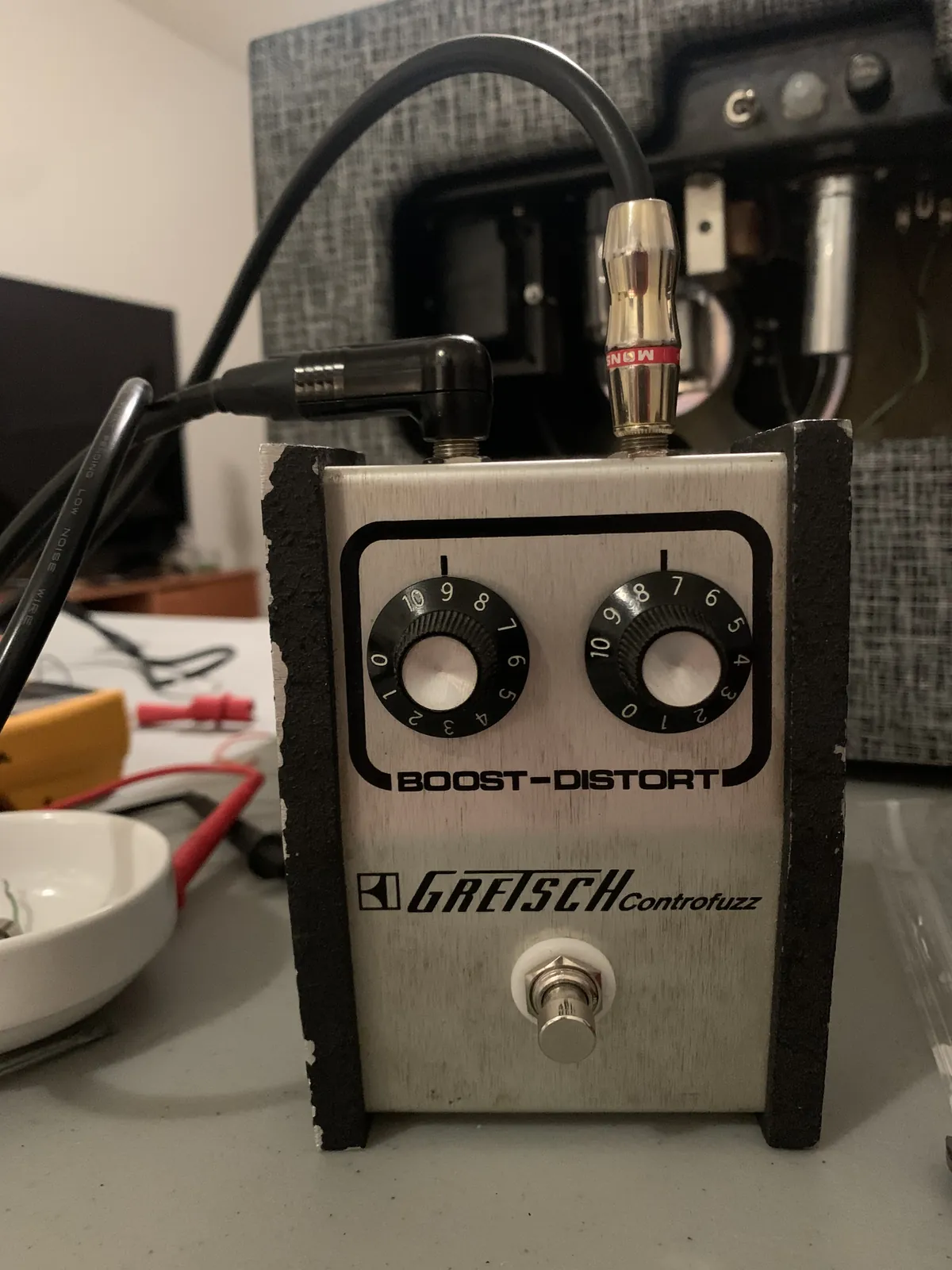
This write-up documents a debug of a vintage Gretsch Controfuzz Boost–Distort pedal. The fault: when the back panel was closed, the pedal would short out the distorted signal and pass the dry signal when the pedal was turned off. Resoldering the switch and input connections did not fix it. The cause turned out to be mechanical — the battery clip was touching the newer switch lead whenever the panel was screwed down.
Pedal
| Field | Value |
|---|---|
| Model | Gretsch Controfuzz, Model No. 7798 |
| Controls | Boost, Distort; footswitch bypass |
| Op amps | Two type 748, each with a 25 pF compensation capacitor |
| Clipping | Pair of 1N4001 diodes |
| Power | 9 V battery |
Schematic
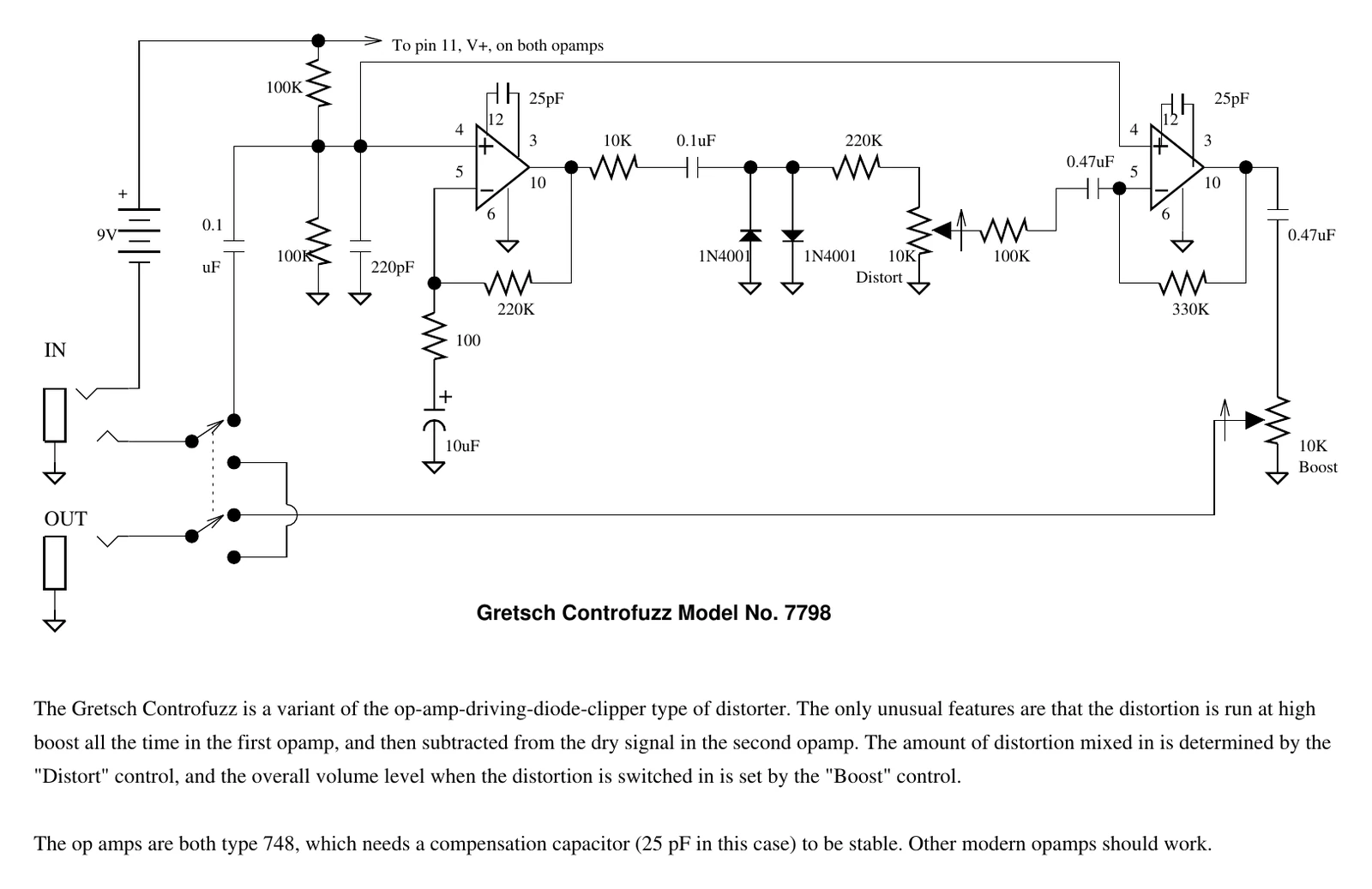
From the schematic sheet: the Controfuzz is a variant of the op-amp-driving-diode-clipper type of distorter. The distortion is run at high boost all the time in the first op amp, then subtracted from the dry signal in the second op amp. The Distort control sets how much distortion is mixed in, and the Boost control sets the overall level when the effect is switched in. Both op amps are type 748, which need the 25 pF compensation capacitor to be stable.
Download the Gretsch Controfuzz schematic (PDF)
Reference
Now I notice that the Contro Fuzz circuit is not all that different from the Expanda Fuzz.
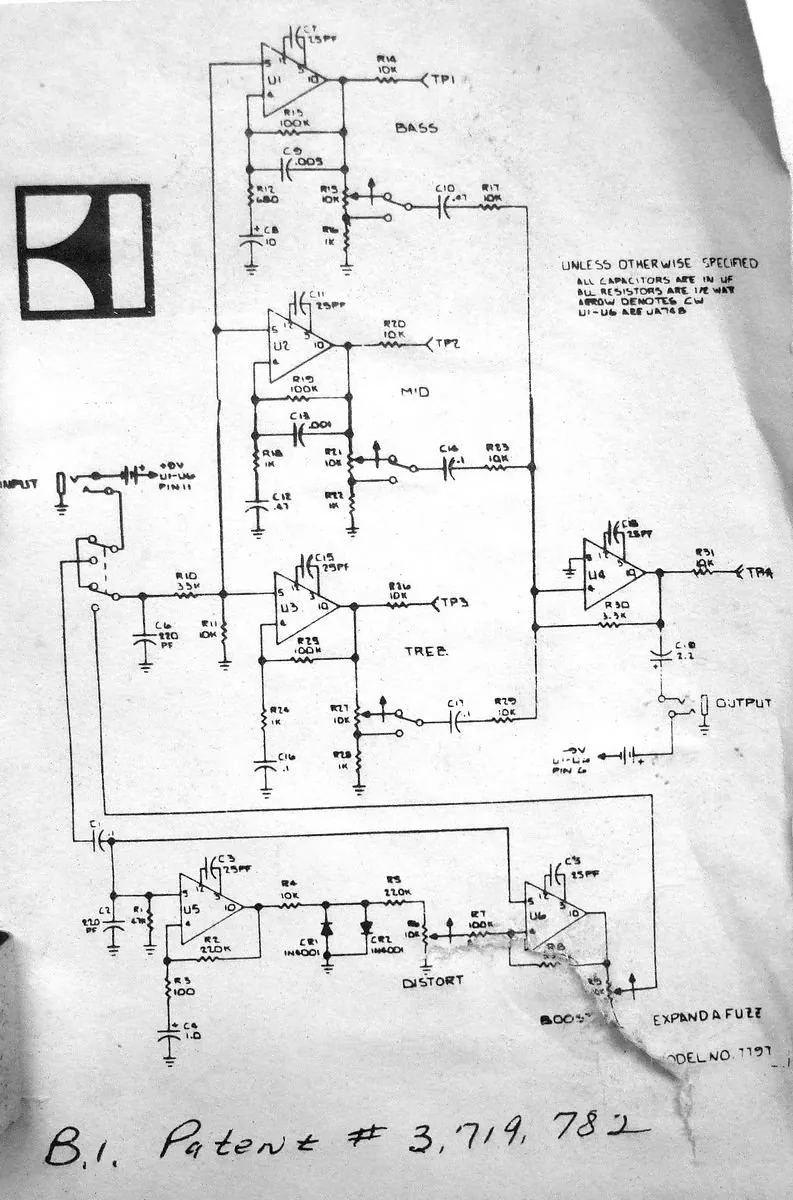
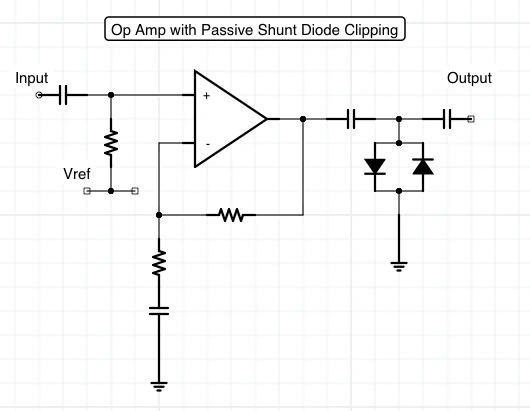
- Beavis Audio — Gretsch Controfuzz schematic
- Op amp distortion and overdrive topologies
- Circuit board pictures (Reverb listing)
Debug log
9/10/23
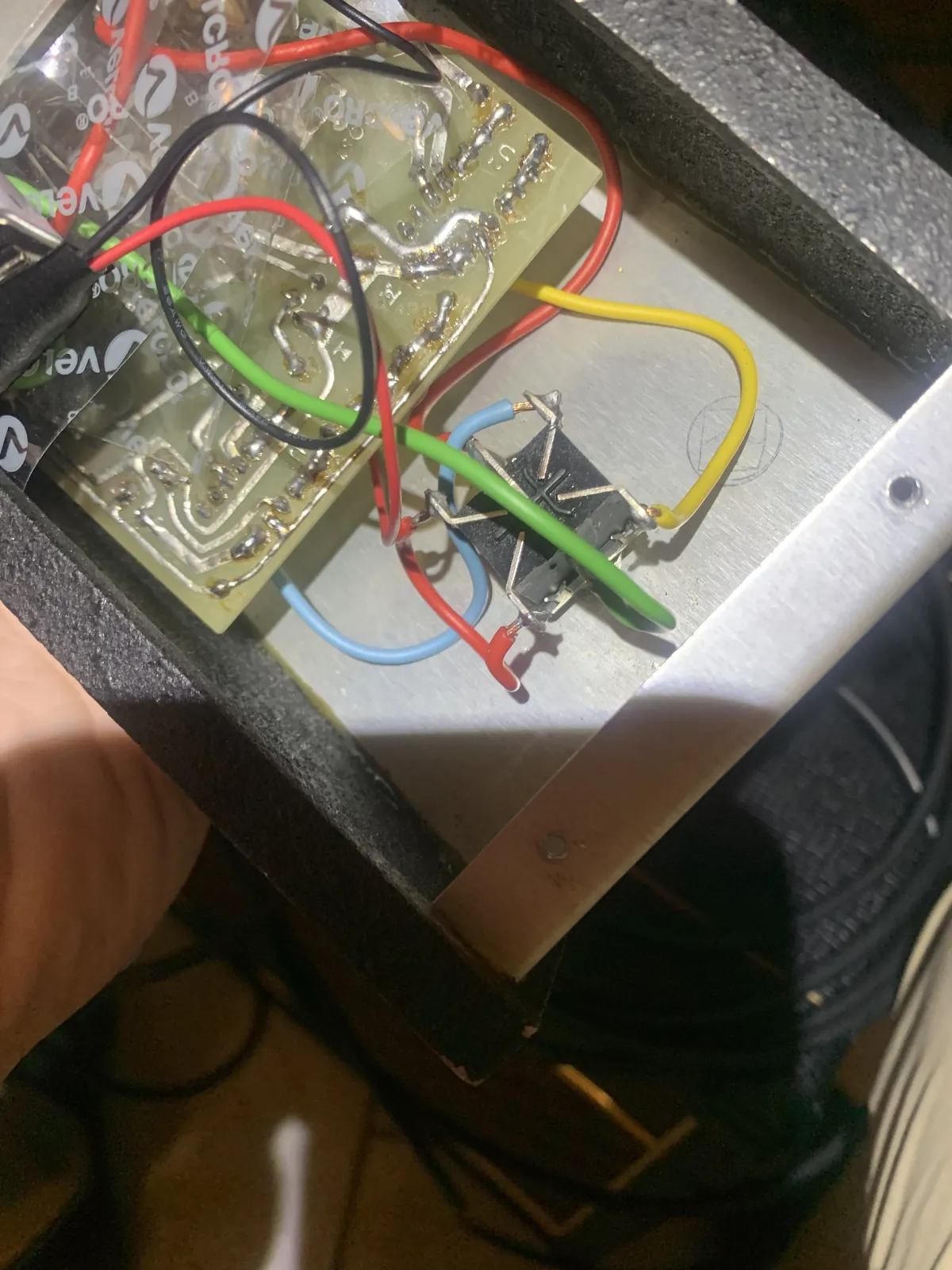
- Resoldered several different connections on the switch and inputs.
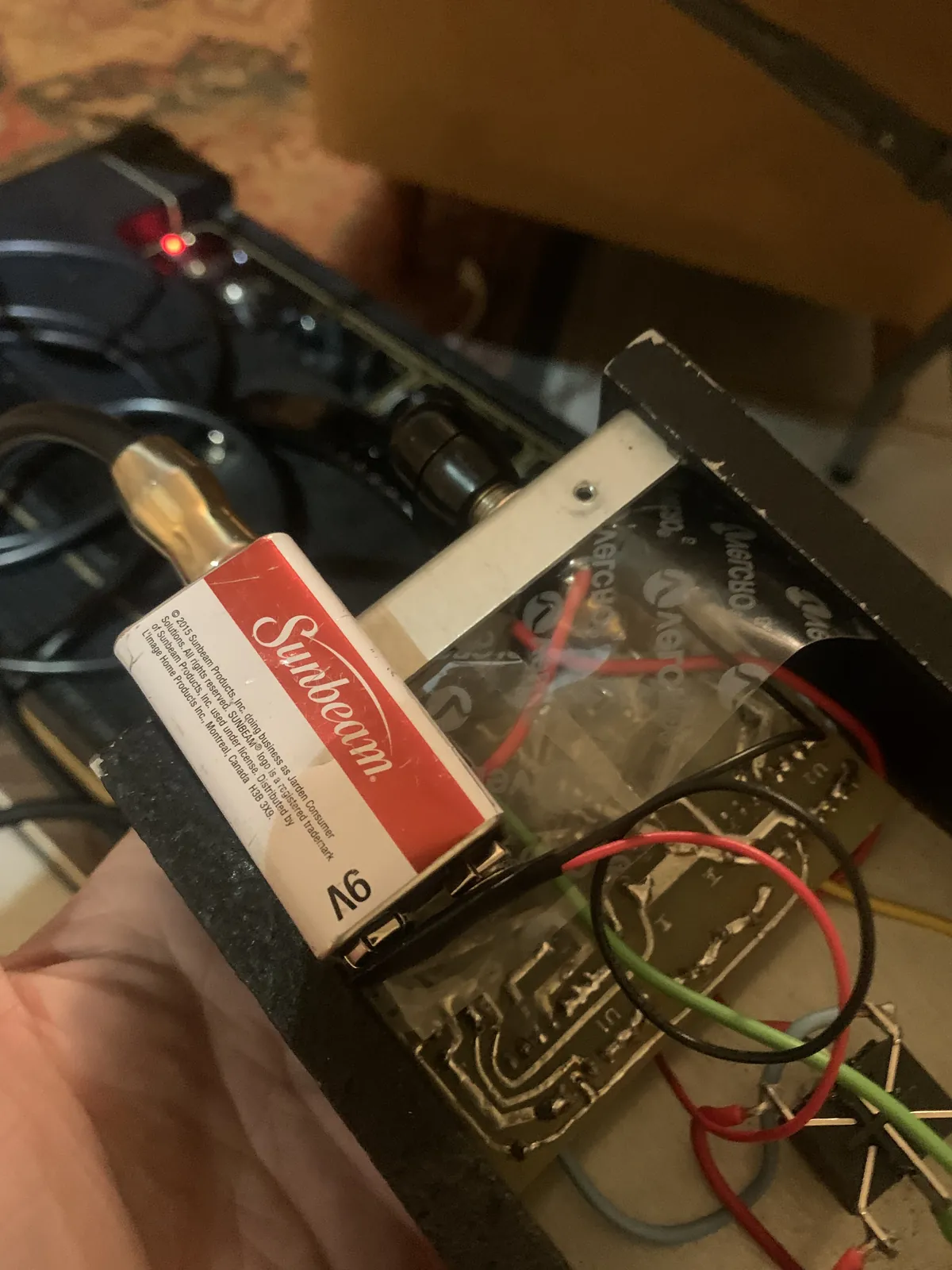
- When I close the pedal, the back panel will short out the distorted signal and pass the dry when the pedal is turned off. Maybe it’s shorting the power?
9/14/23
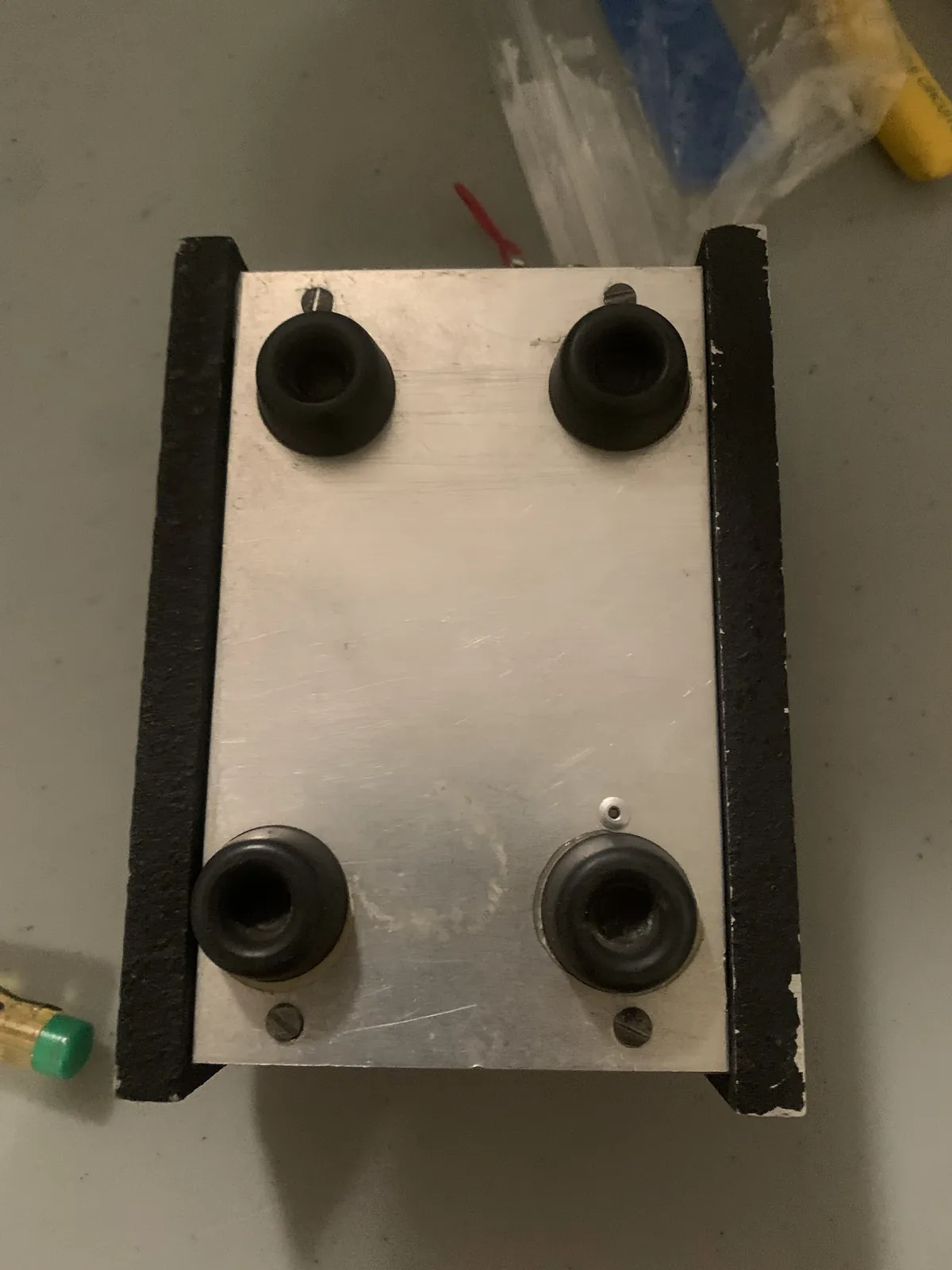
- Experimented with what order to tighten down the screws. Discovered the lower right, above the battery clip, affected the signal. Pulled the battery out and put it to the left — it worked.
- Kept pressing on the middle of the panel and found out the battery clip was touching the newer switch lead. Put electrical tape over the clip and it works perfectly now!
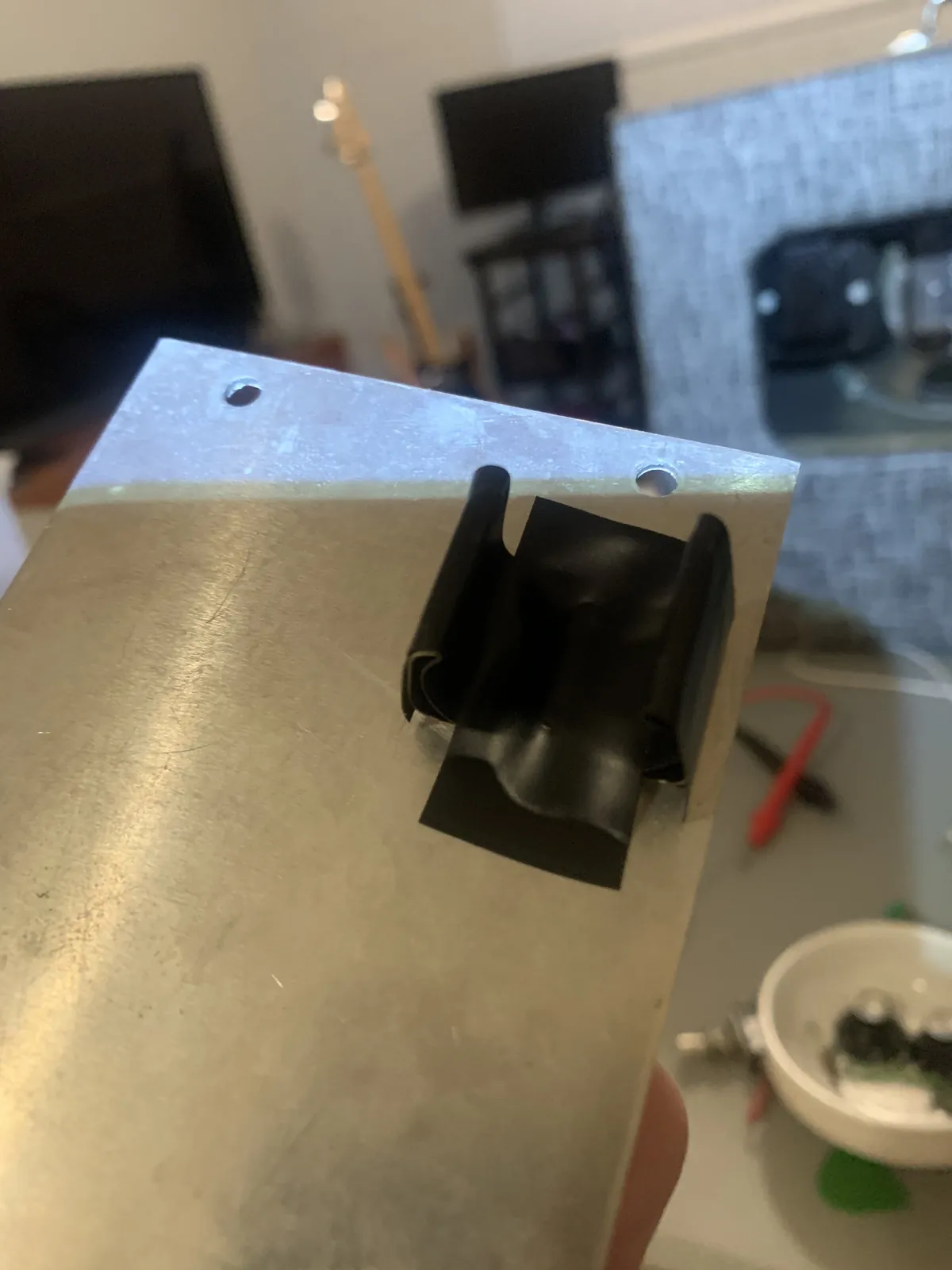
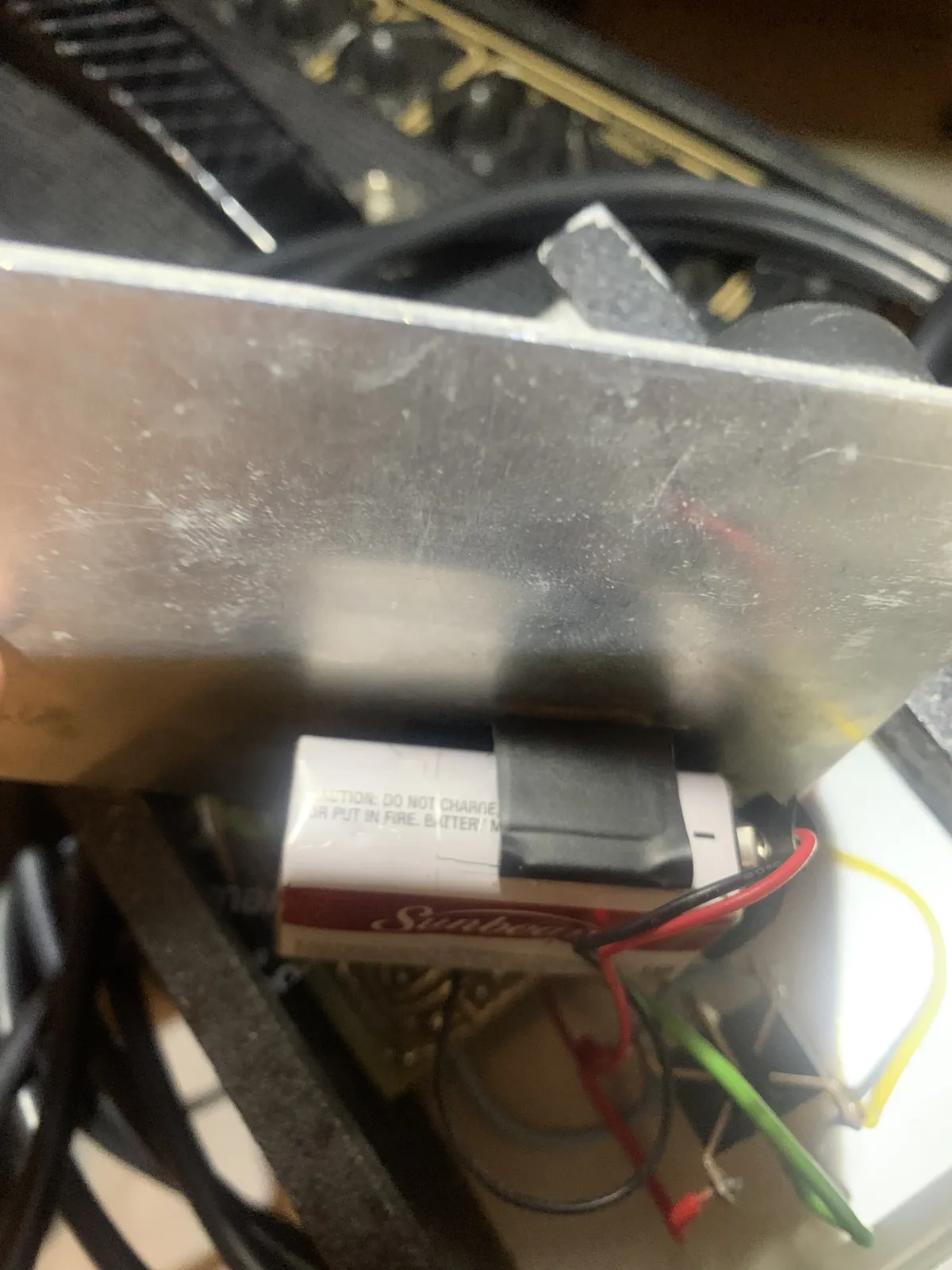
Result
With the clip insulated, the back panel can be screwed down without the clip touching the switch lead, and the pedal works normally.
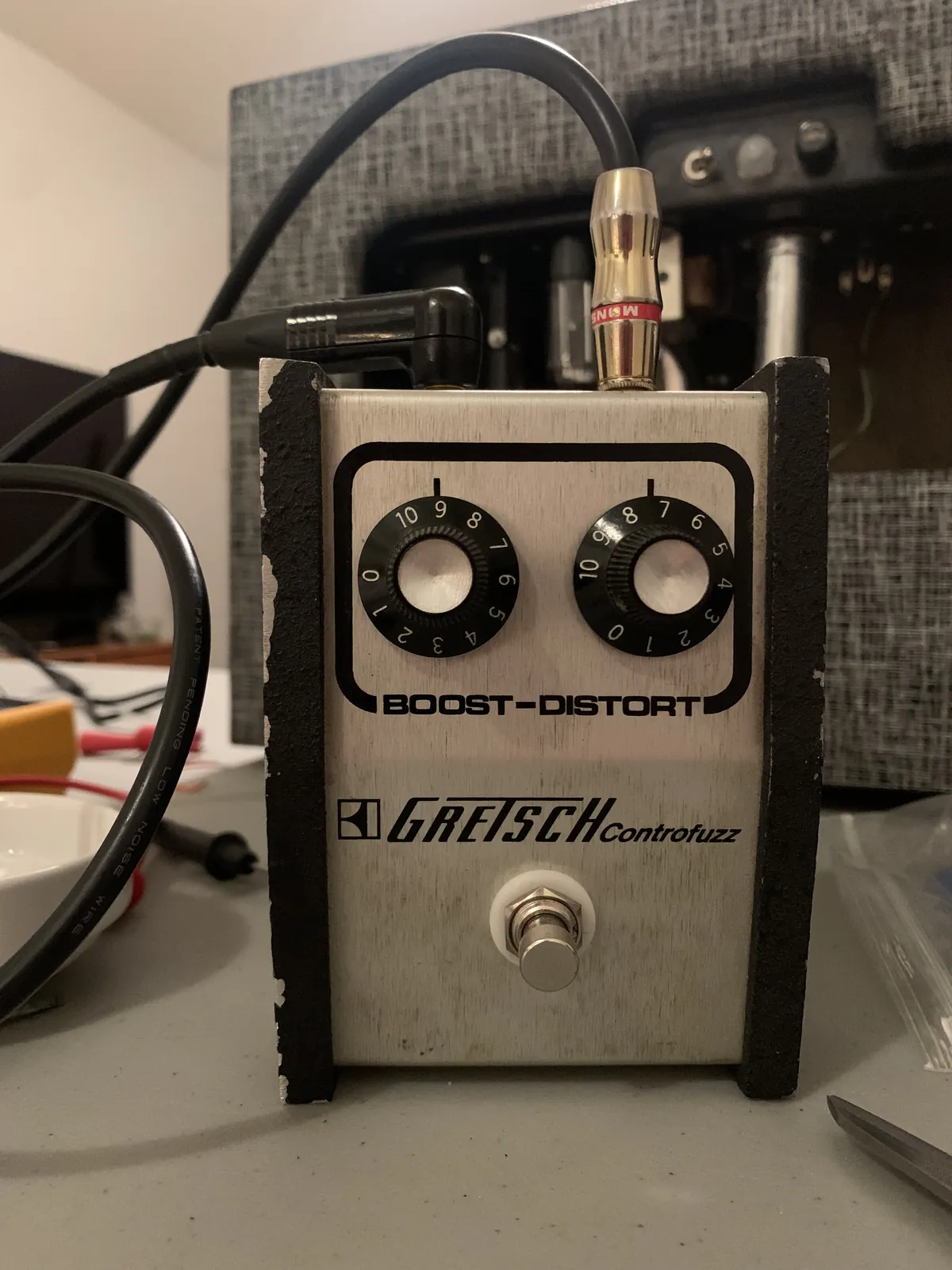
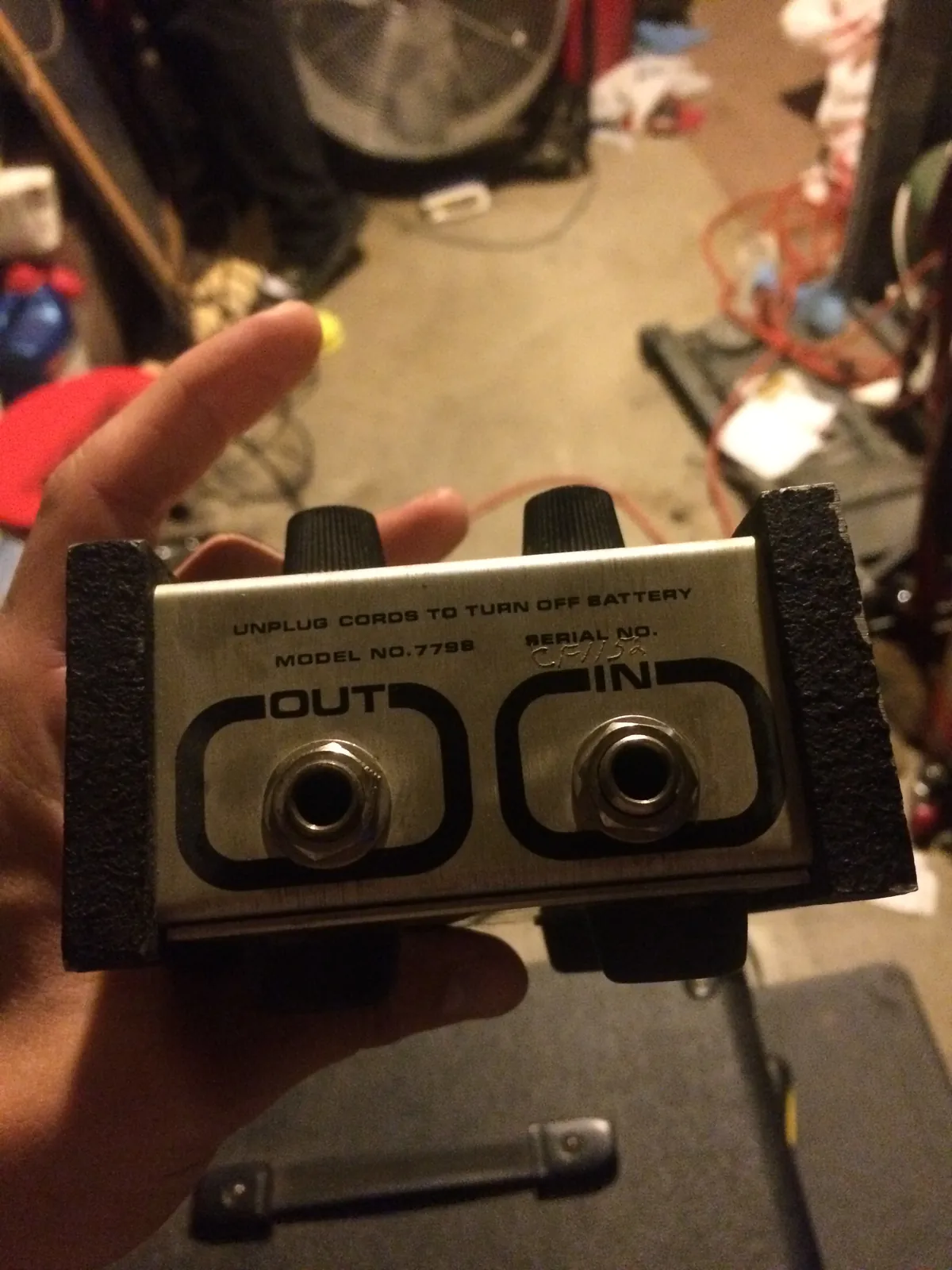
Photo gallery
Select an image to view it full size. IMG_47xx–IMG_50xx are earlier photos from 2016.